 smmsun•Last Update On: July 26, 2026




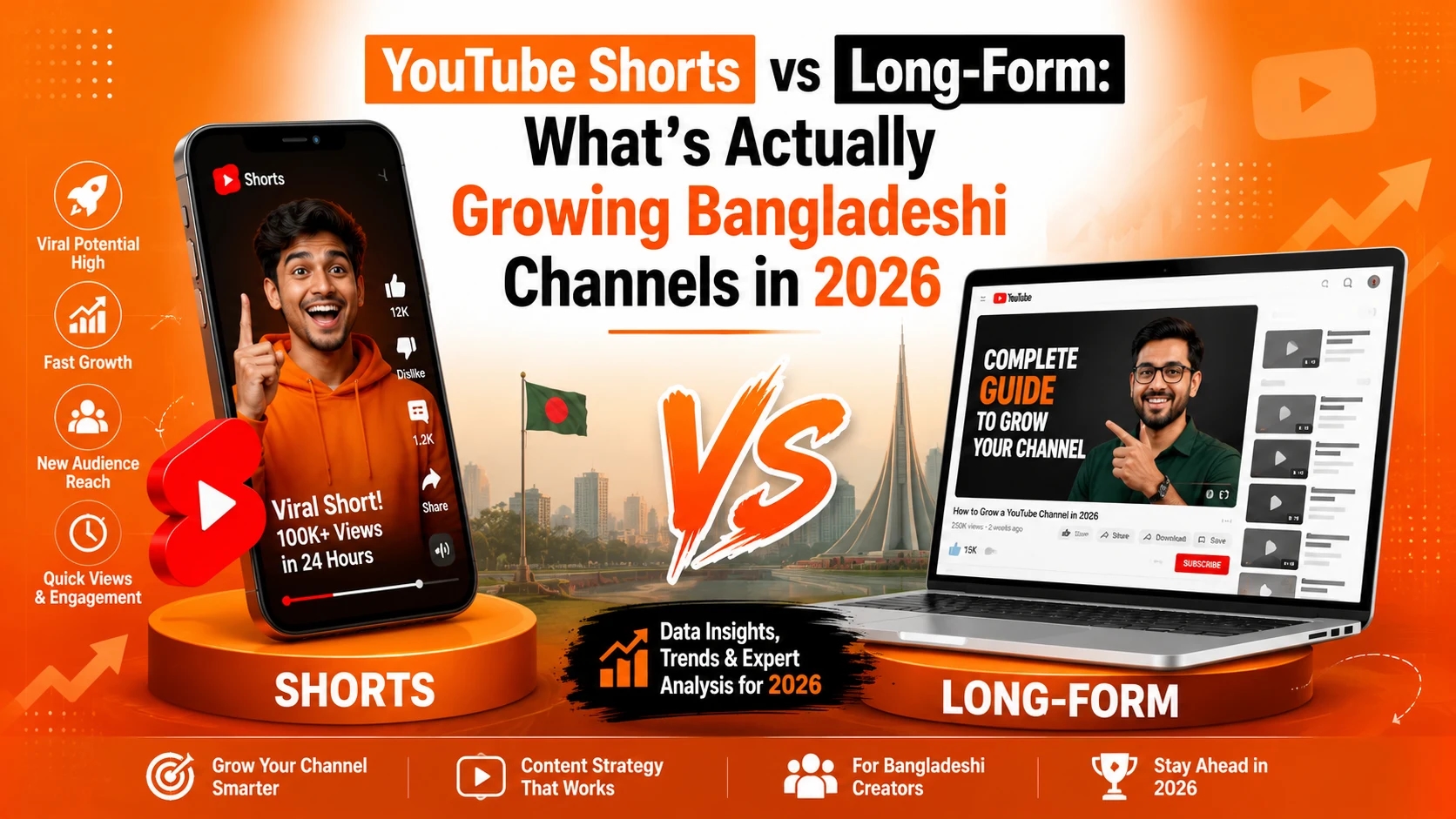
YouTube Shorts vs Long-Form: What's Actually Growing Bangladeshi Channels in 2026
Every few months, a new wave of Bangladeshi creators asks the same question: should I go all-in on Shorts, or keep grinding on long-form videos? The honest answer isn't as simple as "Shorts are the future" or "long-form pays the bills." After looking at how channels across Dhaka, Chattogram, Sylhet, and Rajshahi are actually growing this year, the real picture is a lot more interesting and a lot more useful than either extreme.
This isn't a theoretical debate. It affects how you spend your time, what kind of content you plan, and ultimately whether your channel grows into something that can support you. Let's break down what's really working in 2026.
Why Shorts Took Over the Conversation
YouTube Shorts didn't just become popular by accident. For Bangladeshi audiences specifically, a few things lined up at once:
- Mobile data costs still matter here: A 30-second Short loads instantly even on a modest connection. A 15-minute video does not. For a huge chunk of Bangladesh's mobile-first audience, that difference alone decides what gets watched.
- The algorithm rewards volume and speed: Shorts get tested against a much larger, faster-moving audience pool. A new channel with zero subscribers can still get pushed to thousands of viewers within hours, something that almost never happens with a fresh long-form upload.
- Low production barrier: You don't need a proper setup to post a Short. A phone and a decent idea is often enough, which is why so many small business owners and first-time creators in Bangladesh are experimenting with shorts before touching long-form at all.
If you're formatting vertical content for Shorts, it's worth double-checking your dimensions and length limits. We cover the exact specs in our safe zones and video dimensions guide, which also covers Reels and TikTok if you're repurposing the same clip across platforms.
Where Shorts Fall Short (Pun Intended)
Here's what doesn't show up in the hype: Shorts are extremely good at getting views, but noticeably weaker at converting viewers into subscribers who actually come back. Watch time per view is low by design, that's the format. And YouTube's monetization split, Partner Program eligibility rules, and brand deal expectations still lean heavily on long-form performance and total watch hours.
We've seen this play out repeatedly with Bangladeshi channels: a Short goes semi-viral, the view count jumps into the hundreds of thousands, and the subscriber count barely moves. That's not a failure, it's just what Shorts are built to do. The mistake is expecting Shorts alone to build a loyal audience.
Why Long-Form Still Has the Edge for Serious Growth
Long-form video is where the actual relationship with your audience gets built. A 10-15 minute video gives you room to demonstrate expertise, tell a story, review a product properly, or just let your personality come through things a 30-second clip physically cannot do.
More importantly for monetization: watch time from long-form videos carries far more weight toward YouTube Partner Program thresholds than Shorts views do. If your goal is ad revenue, sponsorships, or building a channel that generates consistent income, long-form is still doing the heavy lifting in the background even while shorts bring in the traffic.
This is especially true for niches that are growing fast in Bangladesh right now — tech reviews, personal finance, vlogging, and educational content. Audiences in these niches watch Shorts to discover a creator, but they subscribe and stick around because of the long-form content.
What's Actually Working in 2026: The Hybrid Model
The channels genuinely growing right now aren't choosing one format they're using Shorts and long-form for two different jobs:
- Shorts = discovery. Fast, punchy, designed to be found by people who've never heard of you.
- Long-form = retention. Deeper content designed to turn a Shorts viewer into a subscriber and, eventually, a loyal watcher.
A common pattern we're seeing works well: post one solid long-form video per week, then cut 3-5 Shorts from that same video: a hook, a punchline, a surprising stat, a behind-the-scenes moment. This keeps upload frequency high (which the algorithm likes) without doubling your actual production workload.
If you're just starting to build that consistent posting rhythm, our guide on building a strong organic following walks through the habits that tend to compound over time, regardless of which format you lean on.
Where a YouTube SMM Panel Fits Into This Strategy
Here's the part most "Shorts vs long-form" articles skip entirely: neither format grows in a vacuum. Whether you're posting Shorts or long-form, new videos need an initial push to get the algorithm to take notice of early views, likes, and subscriber momentum all signal to YouTube that a video (or a channel) is worth showing to more people.
This is exactly where a YouTube SMM Panel becomes useful, especially for creators and small businesses in Bangladesh who don't have an existing audience to lean on yet. At SMMSun, Our YouTube SMM Panel is built specifically for this, giving new videos and channels the early traction that makes organic discovery more likely, whether you're pushing a 30-second Short or a 20-minute deep dive.
A few ways creators are using an SMM Panel to support both formats:
- For Shorts: boosting early views and likes right after publishing, when the algorithm is still deciding how far to push the video. You can buy YouTube views sized to match your typical Shorts performance.
- For long-form: building subscriber count steadily so new uploads have a warmer audience waiting, which also helps with watch time signals. Our YouTube Subscribers service is priced for Bangladeshi budgets, with local payment options like bKash and Nagad.
- For monetization pushes: if you're chasing the subscriber or watch-hour threshold for YouTube Partner Program eligibility, a well-timed boost can shorten the runway. It's a similar principle to what creators are doing on other platforms — Our Facebook monetization guide covers the same idea applied to Facebook's in-stream ads program, if you're running channels on both platforms.
If you're new to the concept entirely, Our What is an SMM Panel? guide breaks down how these panels actually work, what's safe to use, and what to avoid — worth a read before you spend a single taka.
A Few Mistakes to Avoid
- Treating Shorts view counts as a growth metric. A Short with 500K views and 40 new subscribers is not underperforming. Judge Shorts by discovery and reach, judge long-form by retention and subscriber conversion.
- Abandoning long-form too early. It's tempting to chase the fast wins Shorts provide, but channels that drop long-form entirely often plateau. YouTube's recommendation system still favors channels with a mix of content types.
- Posting Shorts with no connection to your niche. Random trending audio with no relevance to your channel topic might get views, but it rarely converts. Bangladeshi audiences like anywhere subscribe to creators who are consistent about what they cover.
- Ignoring watch time on long-form uploads. Retention in the first 30 seconds of a long-form video matters more than almost anything else. If people are dropping off early, no amount of Shorts traffic will fix the underlying content problem.
The Bottom Line
Shorts and long-form aren't competing formats; in 2026 they're two stages of the same growth funnel. Shorts get you found. Long-form gets you kept. Bangladeshi channels that are actually growing right now are the ones treating them as partners, not alternatives, and using tools like a YouTube SMM Panel to give both formats the early momentum they need to reach a wider audience organically.
If you want help figuring out the right mix of views, subscribers, and engagement for your specific channel and niche, browse our full range of YouTube SMM Panel services or get in touch with our team, we're happy to walk you through what makes sense for where your channel is right now.